
Luxembourg jobs with visa sponsorship for Indians: how to find employers and check a job offer
Is it possible to get a job in Luxembourg from India?
Yes. You can apply for Luxembourg jobs while living in India, and Luxembourg’s official international recruitment platform confirms that candidates can apply from abroad. The harder part is finding a vacancy that fits your experience, at a company ready to handle the paperwork of hiring someone from outside the EU.
That paperwork, the pay on offer and the long-term residence rules all feed into one decision, so this guide covers them together. Begin with a specific vacancy, then test it against each section before you plan a move.
October 2026 change: For new first-residence applications from 1 October 2026, Luxembourg has replaced the separate temporary-authorisation-to-stay application with a long-stay Visa D application, submitted through the competent diplomatic or consular channel. Applications submitted on or before 30 September 2026 follow transitional arrangements.
What “visa sponsorship” means in Luxembourg
Job seekers use the phrase loosely. In practice, what the employer does depends on the residence category you apply under. It usually comes down to two things: offering an employment contract that qualifies, and completing the recruitment formalities that apply when a company hires from outside the EU.
Two categories matter for most Indians moving for work: the salaried-worker route and the EU Blue Card for highly qualified employment. The job, the contract and your qualifications decide which one to look at.
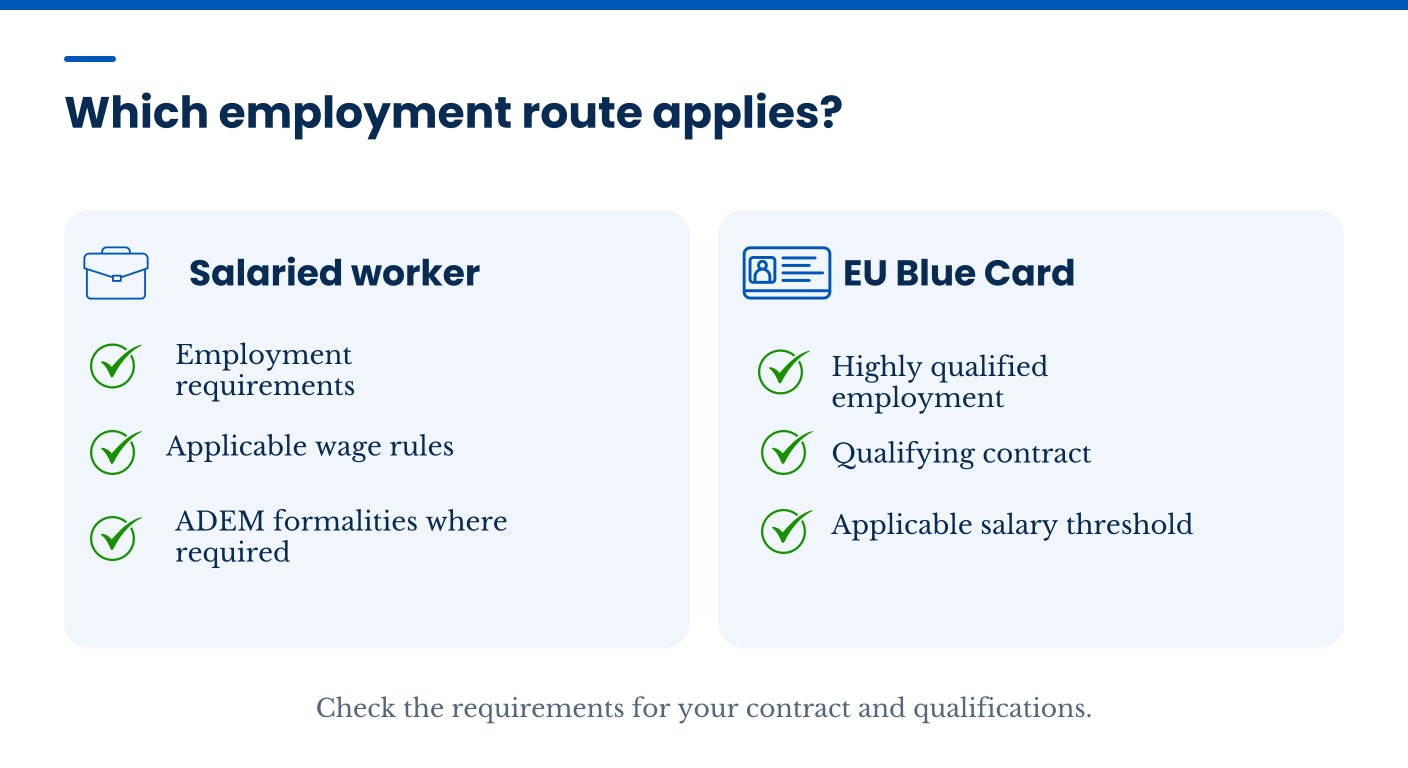
| Point to check | Salaried-worker route | EU Blue Card |
| Employment category | Salaried employment meeting the applicable requirements | Highly qualified employment |
| Contract and pay | Signed employment contract meeting applicable wage requirements | Qualifying contract of at least six months and the applicable annual salary threshold |
| Qualifications | Evidence relevant to the employment | Evidence meeting the high-qualification requirements |
| Employer formalities | ADEM recruitment certificate where required | Category-specific employer requirements |
| Application from India | Visa D under the relevant residence category | Visa D under the EU Blue Card category |
Read the current official guidance for the category and salary requirement when you prepare your application. A job title or an attractive salary alone doesn’t establish eligibility.
Finding employers who will consider you from India
Start from a role, not a list of companies. Decide your occupation, experience level and working languages, then search where you can see who the employer is and read the original vacancy.
How can I get a sponsorship job in Luxembourg?
Target roles that match your experience, work through the employer’s selection process and secure a qualifying employment contract. Tell the employer early that you’re based in India, and find out whether they can complete the recruitment formalities for the relevant residence category. Immigration approval comes after that, and you need it before you relocate.
How do I find a company willing to sponsor my visa?
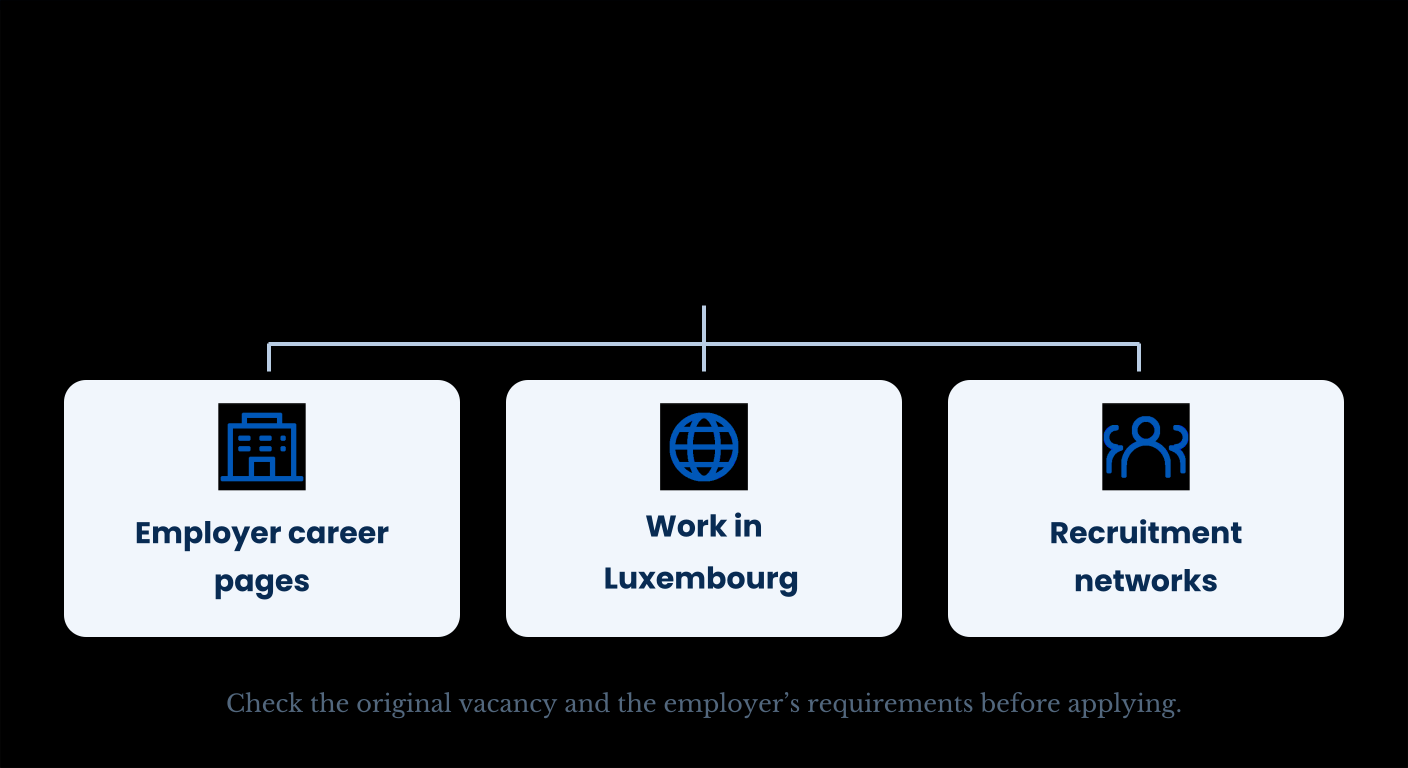
Employer career pages come first. The company’s own website should tell you where the job is based, what experience and languages it needs, and whether there are conditions about work permission. If you spotted the vacancy on a job portal, look for it on the career page as well. Some genuine hiring runs through agencies, so a missing listing isn’t proof the offer is fake. It is a reason to ask questions.
Next is the Work in Luxembourg platform, which connects employers with international candidates whose qualifications relate to occupations in very high demand. Access is subject to review, and the platform says it won’t consider applications outside its listed occupation categories. Read its registration criteria before you build your search around it.
Agencies and professional networks can turn up roles you wouldn’t find yourself. Before you engage, find out who would employ you, who runs the interview and whether the agency is authorised to recruit for that vacancy. Save the original advertisement, the vacancy reference, the recruiter’s name and every message, so later paperwork is easy to compare with what you were first told.
Which company gives visa sponsorship?
Whichever one has a suitable vacancy and is willing to handle the formalities for it. Don’t assume a company sponsors every international hire, because conditions differ between teams, locations and job levels in the same business. Look for explicit mentions of international applicants, relocation support or help with work authorisation.
When the advertisement is silent, ask. A short version for a recruiter: “I am based in India and would need the appropriate Luxembourg work and residence permission. Can you consider my application for this role?” A fuller version for HR: “Do you consider applicants currently living in India, and can you complete the employer requirements for the relevant Luxembourg residence category?” The reply tells you whether the vacancy is open to international candidates or meant for people who already have local work rights.
Which companies sponsor visa in Luxembourg?
Be wary of any ready-made list. A firm’s international presence or past overseas hiring says nothing about the role in front of you, which is why this article doesn’t name companies as confirmed sponsors. Each vacancy needs its own confirmation.
Check the employer’s Luxembourg careers page, then ask HR whether the vacancy accepts applicants without existing local work rights, which employer formalities they will complete and whether relocation help is included. Note the vacancy reference and the date they replied.
Which jobs to target
Which jobs offer visa sponsorship?
It depends on the employer and the position, not the job title alone. The vacancy has to lead to qualifying employment, and the employer has to be willing to complete the recruitment requirements. The salaried-worker and EU Blue Card routes cover different employment circumstances.
Which job is in high demand in Luxembourg?
A sensible place to start is ADEM’s 2026 very-high-shortage list, which has 20 occupations. Its update names roofing installation and restoration, industrial quality management and engineering, and industrial equipment installation and maintenance among the additions. These are narrow occupational categories, so a job in one of those sectors isn’t automatically a shortage job.
What are some jobs available in Luxembourg with visa sponsorship?
Industrial maintenance, industrial quality engineering and roofing are all worth searching if your training matches the duties. Treat them as search ideas, not verified live sponsored vacancies. Check that each advertisement is still open, and ask whether the employer considers applicants living in India.
What sponsorship jobs are available in Luxembourg in 2026?
A place on the shortage list doesn’t mean a particular employer has an opening today. Match the 2026 shortage occupations against live advertisements on employer career pages and on the Work in Luxembourg platform, which focuses on specified high-demand occupations and reviews candidate eligibility.
Keep a shortlist as you go: job title, employer, vacancy reference, required languages, application deadline, and whether overseas applicants are considered.
Applying from India
Write your CV so a recruiter can compare it with the vacancy in a minute. Put the most relevant experience first and describe work you have actually done. A maintenance technician can list the equipment they service, the faults they diagnose and their safety duties. An IT applicant can name the systems they work on and how large the projects were. Someone in hospitality can describe service duties, team supervision and shift patterns.
- Mirror the published responsibilities in your CV.
- Keep dates and job titles identical across your CV and supporting documents.
- Say up front that you live in India, and give a realistic notice period.
- Describe your language level honestly.
- Ask whether the employer can support your work and residence application.
Language needs vary. English is common in some finance, IT and technical roles, while other vacancies require French, German or Luxembourgish. Let the advertisement decide.
Pay: what the minimum wage means for you
What is the minimum salary in Luxembourg for Indians?
There isn’t a separate one, and nationality doesn’t change the wage scale. Luxembourg’s social minimum wage depends on age and on whether the worker meets the legal criteria for qualified-worker pay. For adults aged 18 and over, the Labour Inspectorate lists these gross monthly rates for full-time work, effective from 1 June 2026:
| Worker category | Gross monthly minimum for full-time work |
| Unqualified adult worker | €2,771.33 |
| Qualified adult worker | €3,325.59 |
These figures are before deductions. Qualified-worker status depends on the applicable rules and on evidence of your qualifications or experience, a collective agreement may set a higher rate, and the EU Blue Card has its own salary requirement.
Is 3000 euros a good salary in Luxembourg?
That depends on what the 3,000 stands for. Find out first whether it means gross or take-home, because the two are very different offers. For full-time adult work, €3,000 gross sits above the unqualified minimum and below the qualified-worker minimum, so whether it meets the wage rules depends on how you’re classified and on any agreement that applies.
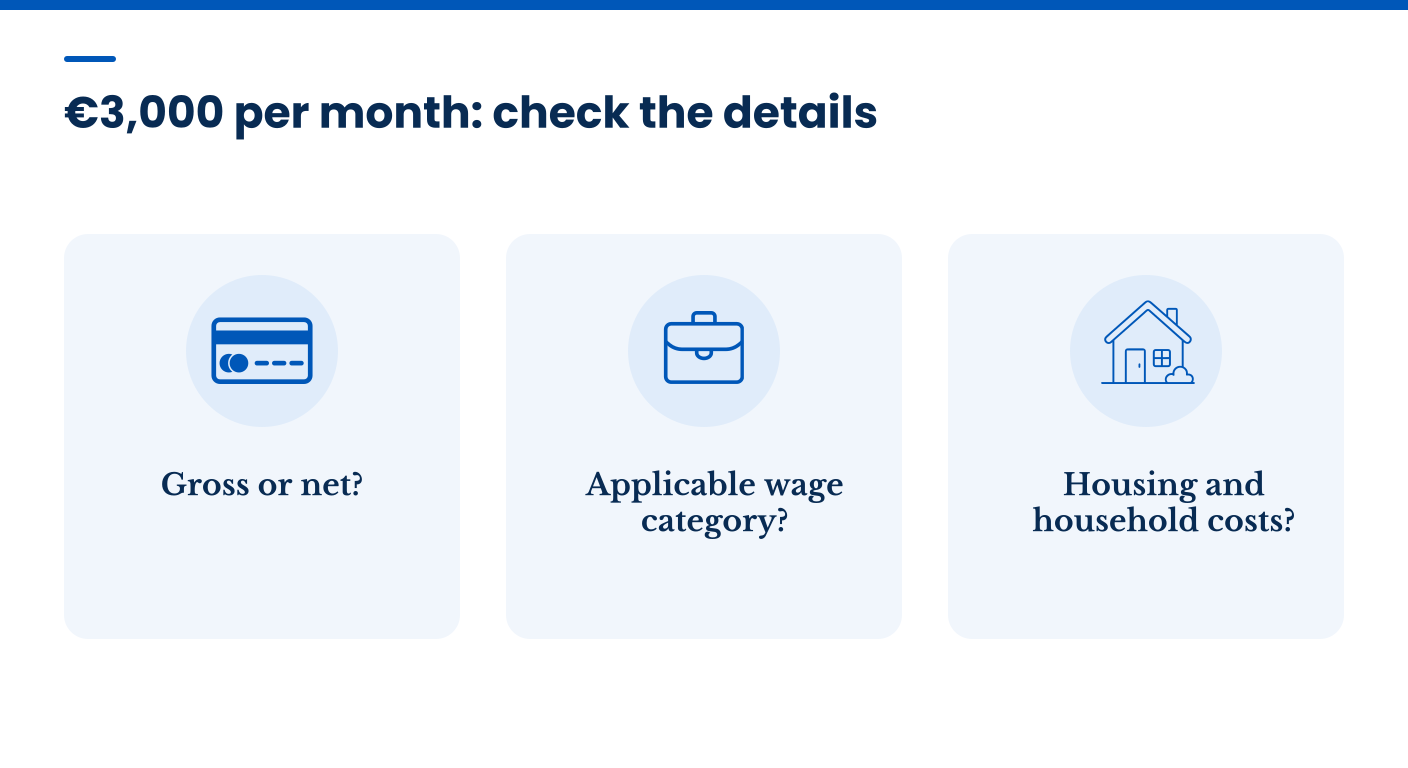
Affordability is a separate question. Ask for an estimated net salary and set it against the rent for the home you would really live in, plus utilities, food, household costs and any commitments you still have in India. Add the deposit and the early moving costs.
A single person sharing a flat and a family renting its own place will judge the same salary differently. Write out a monthly budget before you decide.
Checking a job offer before you accept
Start with the warning signs. The Luxembourg Embassy in New Delhi cautions against misleading visa information and fraudulent offers. It says Luxembourg has no job seeker visa category and that approval can’t be guaranteed in advance. A promise of guaranteed approval, an unexplained shortcut or pressure to pay immediately is a reason to stop and verify.
Verify the employer
Ask for the legal name, registered address and registration number, and compare them with your contract. Luxembourg Business Registers gives access to the Trade and Companies Register and company information.
A name in the register proves less than it seems, because a real company can be impersonated. Find contact details on the employer’s official website and have HR confirm the vacancy, the recruiter and the offer. Don’t rely only on a phone number or link supplied in the offer itself. If an agency is handling recruitment, ask the employer to confirm the agency’s involvement.
Read the contract
Check the employer and employee details, work location, start date, duties, gross pay, working hours, contract duration and any probation conditions. Luxembourg’s official employment guidance lists what an employment contract must contain, so compare your document with it and see whether a collective agreement applies.
Accommodation, deductions, travel and relocation help deserve their own questions. Get any promised benefit in writing.
Look at every payment
Each charge should come with a written breakdown showing the recipient, the purpose, the payment stage and the refund conditions. Keep government fees, visa application centre charges and private service fees separate, ask for invoices and keep receipts. If the recipient or purpose doesn’t match the agreement, sort that out before you pay.
A last check before you say yes
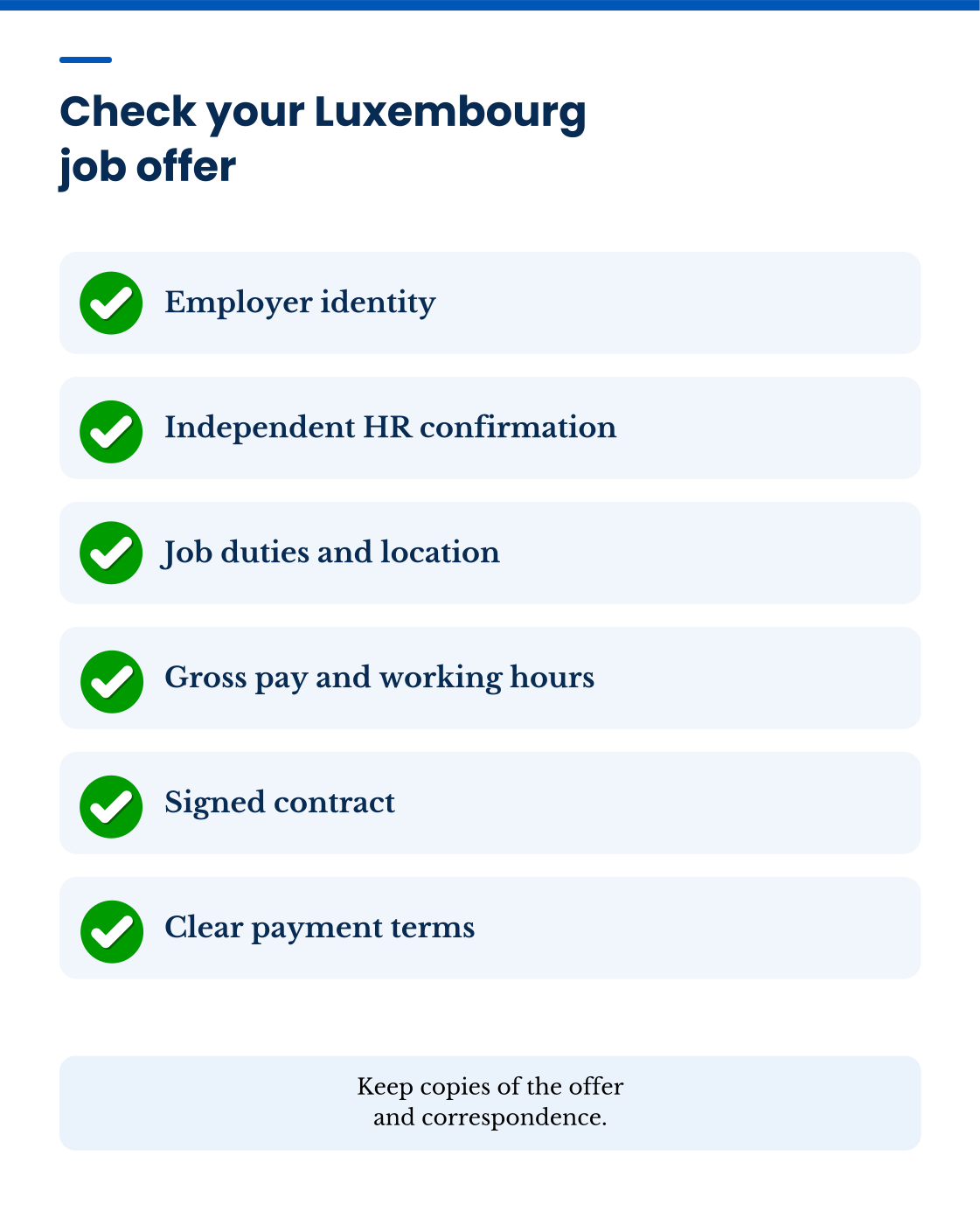
- You have checked the employer’s legal identity and confirmed the recruiter and the offer independently.
- You understand the duties, location and gross salary, and you have read the contract and clarified unclear terms.
- The employer knows you are applying from India, and you have identified the residence category and discussed its employer requirements.
- Every payment has a written purpose and recipient.
- You are working from the current application procedure.
- You have kept copies of the vacancy, the contract and all correspondence.
These checks surface missing information. They don’t replace an immigration decision, and they can’t prove an offer is genuine.
The application process from India, step by step
These steps assume a new applicant moving from India for employment. People already living in Luxembourg, or covered by another status, may face different requirements.
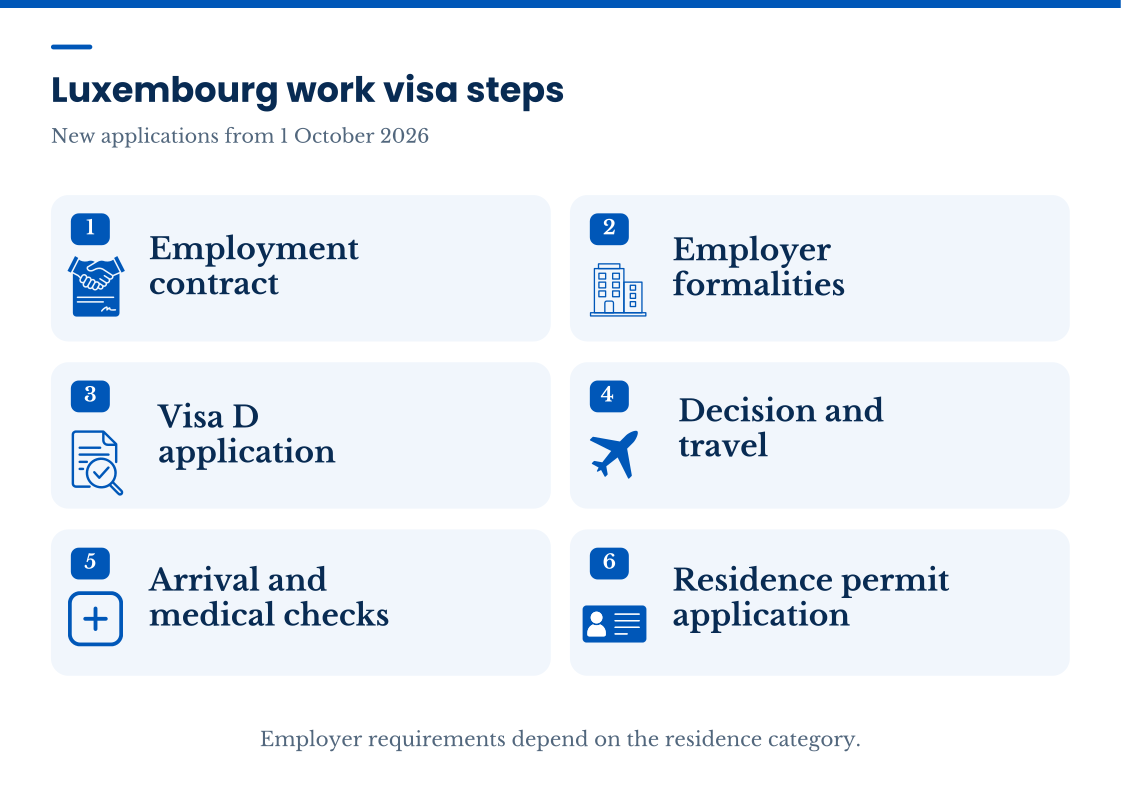
- Secure a contract that fits the category. The duties, qualifications and terms should match the residence category you’re aiming for, and the contract and employer details should line up across all your documents.
- Let the employer deal with recruitment formalities. Where an ADEM recruitment certificate is needed, the employer has to follow the vacancy and certificate process. ADEM says certificates for qualifying very-high-shortage occupations can be issued within five working days after it acknowledges the request. That covers the recruitment certificate only. It is not a five-day visa approval, and nobody should sell it to you as one.
- Prepare the Visa D application. For new applications from 1 October 2026, apply through the Visa D procedure for the intended residence category. The Luxembourg Embassy in New Delhi directs applicants in India to the Luxembourg Visa Application Centre run through VFS Global. Use the current category checklist, and confirm fees and appointment requirements through the official channel.
- Wait for the decision before relocating. A job offer is not an approved immigration application. Agree your start date with the employer and leave time for the application and your travel. The government’s procedure announcement describes a six-month Visa D for approved applicants, followed by the residence-permit steps after arrival.
- Complete the arrival formalities. Declare your arrival at your commune within three days and complete the required medical checks. Current Guichet guidance says to submit the residence-permit application no later than three months before the Visa D expires, under the same residence category as the visa. Follow the instructions for your own case.
Documents and costs
Documents
For the salaried-worker category, current Guichet guidance lists these supporting documents:
- A copy of the full valid passport.
- A recent criminal-record extract from your current country of residence.
- Your CV.
- Diplomas or evidence of professional qualifications.
- An employment contract, dated and signed by both parties.
- The ADEM recruitment certificate.
- Travel health insurance that meets the stated requirements.
- An existing EU residence permit, where applicable.
Anything in a language other than German, French or English needs a compliant sworn translation. The EU Blue Card category has its own requirements, so work from the current official checklist for the category you’re applying under. Cross-check names, dates and employment details across the whole file, and if there are genuine differences, explain them with supporting evidence.
Costs
Budget for the move as well as the application. Ask for a breakdown covering:
- Visa fees and application centre charges.
- Document preparation and translations.
- Insurance and travel.
- Temporary accommodation and rental deposits.
- Post-arrival formalities.
- Any professional services you agree separately.
The Embassy in New Delhi currently lists the long-stay visa fee as €50, with a local equivalent of ₹5,500. Guichet lists an €80 residence-permit issuance fee. They are separate charges and only a small part of the real relocation budget, so confirm amounts and payment instructions when you apply.
Settle early who pays for what. Don’t assume accommodation or flights are covered unless the contract or a written agreement says so.
Can Indians get PR in Luxembourg?
They can apply for long-term resident status if they meet the conditions. For the standard route, Guichet describes at least five years of continuous lawful residence, plus requirements such as stable and sufficient resources and health insurance. Rules on absences, and on which periods count, need to be checked against your own history.
People call this “PR”, but it is a separate application from your first employment permission, and a job offer doesn’t grant it. If settlement is part of your plan, keep records of residence, employment and insurance from the start, and check the rules before a long absence or a change of status.
Talk to Pi Overseas about your Luxembourg plans
Holding a job offer, or want to understand the requirements before you apply? Contact Pi Overseas to talk through your profile, documents and next steps.